Digital Marketing

Chart The Waters

Explore insights on SEO, AI, and digital marketing strategies designed to help your business grow, stay visible, and adapt in a constantly evolving online landscape.
Beacon_Icon_resouse

Lots of businesses advertise online, and there’s a good reason why.

Online advertising allows you to identify and target potential customers to maximize the impact of your campaigns. After all, there’s no point advertising boiler installation services to someone who is renting a small apartment in a multi-story building. This field is growing every year. In fact, in 2019, digital advertising revenue in the United States topped $100 billion for the first time. If you’re planning to grow your business in 2020, you need to create a strategy – fast.

If you have your own website and you’ve ever conducted your own research into digital advertising, you’ve almost certainly come across the two heavy hitters: Google AdWords and Facebook Ads. (If you’re interested in learning more, we have a whole blog post dedicated to digital advertising, designed specifically to help HVAC businesses.)

But how do you know if they’re working?

Once you spend time and money setting up your ads, you’re going to want to know how they’re performing. You need to know what the response is and how many people are clicking through to your website. If your hero service is replacing furnaces, are people finding the information they need? If yes, great! If not, what can you do to improve the page to generate new leads?

This is where Google Analytics comes in. It’s one of the most popular digital analytics tools available online and it’s free to use. Here’s a snapshot of what you can expect:

Google Analytics

This is a real-life example from HeatSource Mechanical, which has been providing superior products, elite craftsmanship and stellar customer service in the Mat-Su Valley for more than 35 years. The spike on February 13 coincided with an advertising campaign we ran on their behalf on Facebook, increasing traffic from zero on February 10 to 100 in a single day.

Interested in learning more? Read on, friend. Read on.

We would love to help! Our Google Analytics experts are experienced in developing effective strategies for HVAC businesses. Contact us today.

Google Analytics For Beginners

Okay, so what does Google Analytics do? Basically, it takes a deep dive into the numbers behind your website so you can know who’s looking, what they want, and what’s working best for your business. Here are some of the potential insights you will be able to glean:

  • How many people visit your website?
  • Where do they come from?
  • Which pages are the most popular?
  • What products are they most interested in?
  • What services are they most interested in?
  • How did they find your website?

The dashboard is designed to be user-friendly and can generate helpful reports on everything from the demographics, interests and behavior of your clients all the way through your acquisitions and conversions. In other words, this is a super handy tool and a great way to make sure you’re investing your time (and money) into effective strategies that will convert sales.

To use another example from our friends at HeatSource Mechanical, here’s a snapshot of the kind of data you can get about acquisitions (meaning new traffic to your website):

Google Analytics

As you can see, it’s very straightforward. This chart shows which strategies are creating the biggest return on investment. We can see that the two biggest drivers are organic searches and social media – in fact, they’re almost equal. As far as digital marketing strategies go, this is a very healthy balance, and it means we should continue advertising in these areas.

OK, that’s great… but I’m still not sure about digital advertising.” No problem, read this blog we created: Do Google AdWords Work For Marketing My Business?

How do I create a Google Analytics account?

Now that you understand what Google Analytics is about, it’s time to create a Google Analytics account. If you already have a Google log-in for a related service like Gmail, Google Drive or YouTube, you’ll be able to use that account. Otherwise, head to google.com/analytics and set yourself up with new one. Make sure to secure your account by selecting the option for two-factor authentication and keeping your password secret.

Fill in the details of your website and then generate the Google Analytics code, which you’ll need to copy and paste onto every page of your website that you plan to track. If you built your website yourself, you can add it into the script, or you can ask your developer to install it.

Next, step up goals to identify the actions you want users to take. For example, do you want people to contact you? Do you want them to sign up for a membership? That way, Google Analytics will know that’s an important metric and start collecting that data.

Google has lots of tutorials to help with this, but if you’d prefer to outsource it, we can help. Schedule a free consultation to learn about our Google AdWords marketing service.

Getting A Google Analytics Certification

When you start looking into Google Analytics, you’ll see a lot of articles talking about certifications. Can you get certified in Google Analytics? Yes. Do you need to? No.

The Google Analytics Academy offers free online courses that help you learn about Google’s measurement tools. There are a range of courses available, from beginner programs that teach you how to set up your account and analyze basic reports, right through to advanced offerings that help you understand the data collection process and more complex analysis and tools.

There are also Google Analytics Mini-Courses available on YouTube, which can help you get started an optimize your strategy. This is a great option if you’re keen to do it yourself.

You don’t have to be certified to be able to use and understand the software. Generally speaking, it’s a very intuitive program, especially once everything is up and running.

HeatSource Mechanical is a good example of a typical HVAC audience overview:

Google Analytics

See? The menu on the left side of the page includes everything you need to know, and the software collates all the data into easy-to-understand graphs and charts. It certainly beats a spreadsheet, doesn’t it? There also are save/export/share buttons at the top right of each page, which makes it very easy to share the data and use it however you need.

However, if you’d like someone to help crunch the numbers, analyze the results and recommend strategies to take your business to the next level, contact us.

Understanding Google Analytics Reports

Google Analytics splits reporting into five main categories: Realtime, Audience, Acquisition, Behavior and Conversions. Each of these categories has a drop-down menu that allows you to explore them in detail. Here is a quick overview with a case study from HeatSource Mechanical.

1. Realtime

Realtime analytics are split into the following sub-categories: overview, locations, traffic sources, content, events and conversions. This gives you an insight into what’s going on with your website at any particular time and is a great way to tell if something is trending well… or if something is broken. It’s most useful for website that experience a high level of traffic.

2. Audience

Audience analytics provides a great way to get to know your audience. It drills down into specific detail when it comes to things like demographics, interests, geo, behavior, technology, and more. Who is reading your website? For how long? How many pages do they visit? This kind of information helps you tailor your page so you can give people what they want.

For an HVAC business like HeatSource Mechanical, we would expect to see something like this:

Google Analytics Google Analytics

Google Analytics

Information like this helps you maximize the impact of your messaging. You know that most of your customers will be aged 25-34, most of them are male, and they’re the kinds of people who lead active lifestyles. Because of this, you might go for a light and friendly tone and style with small chunks of text that are easy for a busy person to consume on the go.

3. Acquisition

 The acquisition tab is an incredibly valuable resource. After all, what’s the point of digital advertising if you’re not selling more furnaces and installing more heating systems? It categorizes traffic based on Google Ads, your social media accounts and any campaigns you’re running. You’ll be able to see at a glance what’s working and where you should invest.


 This data shows that search and social outreach is very effective for HeatSource Mechanical. In other words, this client is receiving a lot of traffic from Google and Facebook. There are two ways to drive traffic in this way: posting quality content that is relevant and interesting to prospective customers; and investing in Google and Facebook advertising.

What exactly is “quality content”? Here’s a quick guide to search engine optimization (SEO) which will help the content on your website stand out.

 4. Behavior

Behavior is a really fun tool (sorry, we love to nerd out about this stuff). This is where you get to know your customers and see how they progress to your site. Which of your pages is most effective at drawing in new customers? What do they read before they leave? How far do they read down each page before they bounce? It also tells you how your page is performing – how long does it take to load each page?

Google Analytics

 In this case, we can see that most of HeatSource Mechanical’s traffic comes through to the homepage, closely followed by the product page – in particular, looking at furnaces. After this first interaction, those who stay on the page either visit the contact page or the about page. This is great! It means customers either want to use your service or learn more about you.

It’s definitely worth making sure both of these pages are polished and that they provide helpful information so you can capitalize on this opportunity to convert a sale.

5. Conversions

This page is relevant once you’ve set up some goals or if you’re running an e-commerce business through your website. It tracks things like the number of people who schedule a free consultation, the number of people who click through and buy a new product, and things like product performance and transaction value. This probably isn’t one for HVAC businesses.

“Okay, okay. That’s all making sense. What else do I need to know?” Here’s a blog that will teach you what analytics you should track.

We’re happy to answer all of your Google Analytics questions. In fact, we’re happy to build your website, set up your social media accounts and develop a killer strategy that will increase awareness of your brand and generate new leads for sales. Contact us today.

Whether you’re shivering through an Alaskan winter or sweating through a Nevada summer, HVAC businesses offer essential services right around the United States.

When a customer’s system breaks down on the coldest night or the hottest day of the year, there’s no-one they’ll be happier to see than YOU.

After all, no-one else can offer heating, cooling and ducting services quite like you. No-one else is as hungry for new business as you and no-one else will give them such great service that they become a loyal, life-long customer. The only question is how they will actually find you.

The answer is a killer digital marketing strategy.

In this article, we’re going to help you understand what a digital marketing strategy is. We’re also going to run you through the basics, including how to create a website for an HVAC business, how to optimize your content so customers can find your products and services, and how to run Google and Facebook Ads so that you will be the #1 choice in your local area.

Oh hey! We’re experts at that! If you’re looking to develop a digital marketing strategy to generate leads for your HVAC business, why not contact us?

Okay, So What Is A Digital Marketing Strategy?

Marketing is the process by which a business promotes its products and services to a customer. Sounds simple, right? Right. Digital marketing is simply the process of doing this on the internet.

With that in mind, a digital marketing strategy needs to make you stand out online. It’s designed to target the computers, tablets and smartphones of your customers and make sure it’s easy for them to find you in their time of need… whether they’re looking to organize an urgent repair or simply clean the gunk out of their heating and cooling ducts. In order to do this, digital marketing strategies typically focus on websites, social media, search engines and ads.

Before you create a marketing plan, there are a few things you need to think about:

  • Who is your ideal customer?
  • What’s your flagship service?
  • What are your best value products?
  • What makes you different from the other HVAC specialists in your area?

Many companies choose to employ a marketing agency to help with this. Agencies can conduct a review of your current online presence, analyze the strategies of your competitors, help you develop marketing goals and recommend specific actions you can take to achieve them.

However, it’s also entirely possible to do this yourself. If you’re feeling ready, read on.

Want to know more about marketing? Here’s a handy blog post we prepared earlier: What Is Marketing? A Look Through The Eyes Of A Marketer.

First Things First, You’re Going To Need A Website

The first step to finding new customers online is to create a website.

A website provides a platform for customers to get to know you. It’s an opportunity to let them know about your HVAC repair, maintenance and installation services and show off the furnaces, boilers, heaters and filters in your product range. Meanwhile, active social media channels will help you connect directly with customers and let them know about special offers.

So how do you make a website? It’s actually never been easier to build your own website, with a multitude of handy tools available online that can help you get up and running in minutes.

Here are some of the common ones we see a lot:

  • Build a website with WordPress: WordPress is an online, open-source website creation tool written in PHP. It’s one of the easiest and most powerful website content management tools available today and can be very cheap to create.
  • Build a website with Squarespace: Squarespace is an all-in-one solution for anyone looking to create a website or online shop. It has a very intuitive interface, making it very quick and easy to get started, but it’s more expensive than WordPress.
  • Build a website with Wix: Wix is another simple and easy website builder that can get you off the ground in no time. Like Squarespace, you start by choosing a template and adding your own words and images, but this platform is slightly cheaper.

 See? Building a website is easy. Of course, if you would prefer to ring in the experts, we’re here to help. Simply reach out via our website and we’ll be happy to help with your website needs.

Which website is best for my business? We at Beacon Media + Marketing recommend WordPress. Find out Why WordPress Is So Popular For New Websites.

Second, Learn About Search Engine Optimization (SEO)

Once your website is up and running, you need to add content. Content is very helpful when customers are trying to find you via search engines, like Google.

It works like this: customers using search engines tend to use the same key words over and over again. If you start using the same key words on your website, Google will assume you’re an expert on that topic and it will start ranking you higher and higher on the search results page. It’s valuable digital real estate, because the #1 result immediately gets 31.7% of all clicks.

That’s 31.7% of all potential customers who could be looking to you first.

This process is called search engine optimization, but it’s usually referred to simply as “SEO”. The best way to put it into practice is to create frequent blog posts that answer common questions customers ask about your products and services, explain why you recommend the brands you do, and even discuss some of the newest trends in the HVAC industry.

Here are five simple examples of key words and phrases you could try:

  1. Best HVAC repair in (insert name of your area)
  2. Get the most out of your heating and cooling this winter/summer
  3. Best air conditioning repair in (insert name of your area)
  4. How to tell if my furnace filters need replacing
  5. Best baseboard heater to use in (insert name of your area)

The more posts you can get to rank on the search results, the better.

SEO is a complex and constantly changing field. Here are six expert ways to optimize your website using SEO so you can Drive More Traffic to Your Website.

Third, Let’s Talk About Digital Advertising

Once your website is up and running and you’ve got lots of strong content, you can think about creating some advertisements that will target (and keep targeting) potential customers.

As far as digital marketing strategies go, one of the best ways to drive traffic to your website is to run Google Ads. Google Ads allows you to target people who are searching for keywords associated with your product and services. In theory, this means you can get more bang for your buck because you won’t waste money on people who aren’t interested.

You’ve undoubtedly seen this type of advertising already. It usually appears in the top 1-5 slots on the results page of your Google search, marked “Ad”. You’ve probably also noticed that once you click on an advertisement for a particular brand, product or service, it will start following you all around the internet: every article you read, every video you watch, even social media.

Google Ads represents 77.8% of all search-related ad revenue in the United States. It’s big business, and there’s a good reason why: it can be very effective. However, it’s not as easy as handing over your hard-earned money and waiting for people to find you.

They come with pros and cons. The pros are that campaigns are highly targeted, measurable, and can lead to rapid results regarding sales generation. The cons are that they require an ongoing investment and that you be charged for every single impression and click.

With that in mind, you have to be smart and you need to have a strategy in place. You need to know who your potential customers are, where they spend their time online, and what tone and style of language will resonate with them.

You also need to come up with a specific goal for each campaign – in other words, don’t just refer people to your homepage. They’ve searched for something specific, so make sure you link them to a page where you can answer their questions. For example, link them to a product page for your new boiler or your duct-cleaning service.

This is not the right platform to increase brand awareness. The more specific you can be about who you want to target and what you want them to know, the more effective your ads will be.

If you’re not sure how to start, and you can afford to spend the money, trial and error is a great way to get a feel for how the platform works and what your customers are looking for. However, if you want to maximize your ROI, ask the experts at Beacon Media + Marketing.

How can you tell if your Google Ads are effective? We’ve created a handy guide. Facebook and Google Ads: What Analytics Should I Track?

Breathe. Okay. That’s a lot of information to consume in a very short amount of time. The good news is that we are here to answer all of your digital marketing questions. For us, navigating the wild world of SEO strategy is just as natural as replacing a boiler is to you.

So why not schedule a consultation?

Let’s fire up your HVAC business’s web traffic together (sorry about the pun).

Originally published on July 20, 2015. Updated on March 4, 2020.

Back in the 1960s, marketing was relatively straightforward. Let’s be real, you’re probably picturing the orange tones and box pleats of the advertising world featured in the TV show Mad Men, complete with boardroom discussions, concept presentations and an expensive media buy.

The industry was turned on its head with the emergence of the Internet in the 1990s. The past 20 years have seen drastic changes, with advancements in technology and the development of social media. Let’s quickly compare traditional marketing and digital marketing.

From bricks and mortar to online

THEN: Most businesses only had physical locations. This meant it was much more difficult for new customers to find businesses they had never heard of, that is, unless they saw an advertisement somewhere. They couldn’t look up anyone for reviews. And what were you supposed to do when you needed to contact a business? Remember their phone number? Or use a PHONEBOOK? Word of mouth was king and reputation was everything when it came to owning a local market.

NOW: Many modern businesses no longer require physical locations, operating completely online. Many have both. Some have physical locations only. As time passes, it’s becoming increasingly difficult to do business the old-fashioned way, because having on online presence means missing out on a huge potential expansion of customers. Customers want convenience and trust. By that, we mean they want to be able to find you easily when they need you, and they want to be able to look you up in advance to make sure you offer exactly what they’re looking for and that you’re reputable.

Having an online presence is critical in 2020. Schedule a free consultation today to talk about your website needs.

From monologue to dialogue

THEN: Marketing was a one-way street, informed by gut-feel and educated guesses. Companies would give snippets of information to potential customers, trying to persuade them to buy or use their products or services. To a large extent, customers were unaware that other options existed. If someone bought a car from Ford, for example, they were likely to continue buying from Ford because that’s what they had used in the past and they knew it to be trustworthy and reliable.

NOW: Engagement is crucial to success in a digital world. Customers feel like they can trust a company that engages with their customers, because that reminds them that they’re dealing with real people. It’s a two-way street, because businesses can utilize the feedback given via the Internet to come up with new ideas and solve problems. Furthermore, positive reviews go a long way to encouraging other potential customers to take the plunge. These are marketing gold.

Read more: 10 tips for optimizing your social media presence

From outbound to inbound

THEN: Traditional marketing focused on the idea of taking your business to your customers. Huge amounts of money and time were invested in buying advertising space on billboards, newspapers and magazines, as well as commercial slots on television and radio. Sales people would cold-call people and go door-knocking to find new business. Essentially, information was forced upon the public, casting a very wide net in the hope of getting a few bites from the right buyers.

NOW: Digital marketing focuses on the idea that customers will find you when they want you. As such, the idea is to make yourself as easy to find as possible. This means an active digital presence, quality content on your website and social media channels and a strong focus on search engine optimization (SEO). Rather than shouting, “buy this!” you can think of it as saying “enjoy this information we’ve provided.” Your content needs to be educational, helpful or funny to build trust with potential customers. A stellar website is key to helping your company reach its potential.

Ready to get started? We are a digital marketing agency based in Anchorage, AK, and Reno, NV. We work with clients all over the United States. Schedule a free consultation!

Next-level digital marketing

Every successful digital marketing strategy requires three basics: a website, a social media presence, and quality content. You can spend as much or as little as you like when it comes to establishing your digital presence and getting started. The most important thing is simply that your business exists online so that potential customers can find you easily.

Here’s how to take your digital marketing strategy to the next level:

Website

Your website sets the foundation for your entire strategy. Good design can lead to stronger connections, more sales leads and a better conversion rate. If you’re transferring to digital from a traditional marketing strategy, it might help to think of it as an online brochure that showcases your products and services and gives customers an idea of what your business is about.

Here are the most important things to keep in mind:

  • Lead generation: Didn’t think you could get a measurable ROI from a website? Yes, you can.
  • Automation: Your website will act as a virtual sales rep, qualifying leads while you sleep.
  • User experience: Guide your prospects on a journey that leads to doing business with you.
  • SEO optimization: Gain more customers because they can find you online when they need you.
  • Mobile optimization: Most web visitors use mobile devices. Use that to your advantage.
  • Multimedia optimization: Videos and graphics create human interactions with customers.
  • Professional appearance: Bring in the right customers by creating the right first impression.

Sign me up! Click to learn more about our website and development service.

Social Media

Social media is the best way to connect with the people who want to do business with you. The key is to prioritize genuine customer engagement. There are lots of different theories about how to do this best, but we think it’s simple: remember you’re talking to HUMANS. Lots of companies fall into the “sell, sell, sell” trap, but the truth is that prospective customers are real people with real problems.

Here are some things to consider in developing your strategy:

  • Team brainstorming: Good ideas can come from anywhere, so utilize your full team.
  • Campaign objective: Define a clear and measurable goal for every campaign to stay consistent.
  • Campaign budget: Run your ads at the budget that will receive optimal ROI and save.
  • Target audience: Delivering your message to the right people will make sure they take action.
  • Editorial calendar: Know what’s coming up next in your social media content and promotions.
  • A/B testing: Test your ads and audiences to learn what works and optimize messaging.
  • Creative media: Show people interesting content that encourages them to engage.
  • Reporting: Daily monitoring and regular reporting is critical to success.

Not sure where to start? Learn more about our social media marketing service.

Quality Content

Imagine a world where you’re at the top of every Google search. Sounds good, right? It all comes down to content marketing. Quality content generally comes into two forms: articles and videos. The idea is to create content that is wonderful to consume while being full of keywords that will help you rank on search engines, working hard to flood your business with qualified leads.

Here are the basic concepts you’ll need to get started:

  • Editorial calendar: Make sure you cover your bases and stay inspired for the future.
  • Best practices: Trends and algorithms change, so stay up-to-date with the latest advice.
  • Headlines: Get clicks with headlines that have been approved by a title optimization algorithm.
  • Subject matter experts: Interviews with experts will position you as a thought-leader.
  • Research: Make sure you share good information that is accurate and interesting.
  • SEO: Use keywords, metadata and backlinks to make sure your content ranks in search.
  • Multimedia: Good images and videos go a long way to increasing engagement and trust.
  • Calls to action: Your content needs to create results, so include a strong call to action.

We get it, this is a lot to take in. Learn more about content marketing and video marketing.

To go ahead and get started, book your free consultation today!

HVAC marketing is a great way for to promote your products and services to customers in your local area, and social media marketing is the best tool for the job . It’s an exciting and fast-moving method that delivers your message straight into the hands of your customers – literally. What’s better than that?

It’s a rapidly-evolving field and there are lots of different platforms to choose from. For the purposes of this article, we’re going to focus on HVAC marketing through Facebook. But now what? What kind of things should you be posting? How often? How can you tell if you’re reaching the right people? Should you run ads?

“I tried it for a while,” we hear you say. “But nothing happened.”

Don’t be disheartened. Sometimes, a few simple tweaks might be all it takes to spit and polish your HVAC marketing strategy. We asked our Social Media Marketing Specialist, Luke Pahlau, for some tips and tricks that will help your HVAC business stand out on social media.

Keep reading, because we’re also going to share case studies from two HVAC businesses (one about content, one about ads) as well as some examples that will help us explain.

Prefer talking to a real person? Give us a call today.

Optimize your Facebook posts

Making your HVAC business stand out on Facebook isn’t as hard as you might think. The truth is there are only three things you need to know to develop a successful HVAC marketing strategy.

  1. HVAC marketing needs valuable content

The first step in developing a knockout HVAC marketing strategy is to publish blog posts that provide valuable content to your audiences. These are important, because it positions your business as an expert in the industry.

“Blogs are great to promote on Facebook because we can target the ad specifically for people interested in their industry,” says Luke. This means if someone is looking for heating, emergency heating repair services, new boilers, duct cleaning services – you name it! – then they will find the things you share on social media to be relevant and interesting. Keep this in mind when you’re planning your HVAC marketing content.

(The added side-benefit of frequent blog posts is that it also makes it much easier for potential customers to find your business via search engines, especially if you answer common questions and make sure they’re fully-loaded with relevant keywords. But that’s a story for another day – here’s a handy article we prepared to help you learn about search engine optimization.)

  1. HVAC marketing is all about engagement

Second, make your posts as interesting and eye-catching as possible.

“In terms of the Facebook ads themselves, using an engaging image or video that is relatable to the audience will encourage people to actually click on the ad,” says Luke. “Videos and short GIFs have been doing especially well when promoting these blogs.”

Let’s be honest. Facebook is a highly-competitive environment, and there are lots of exciting things vying for your customer’s attention. “Andrew just said what?!” “Awww, Jess and John are having twins.” “Can you believe your mother just posted that?” “Hang on a second, I’m just quickly watching another Game of Thrones conspiracy video.” “Oh, and there’s a puppy!”

Somewhere in the middle of that, your HVAC marketing strategy is trying to let your customers know that you just started stocking a fabulous new boiler that will make them happy and comfortable all winter.

The way to do that: VIDEO.

There’s no doubt about the fact that videos are super eye-catching, and when you’re vying for a split second of someone’s time as they’re scrolling down their news feed, you need to do everything you can to grab their attention. The good news is that it’s a simple fix. Just make sure you add a good video, gif or even photograph with every post, as part of your HVAC marketing plan.

(“Video? No, look, it’s probably not for us. We’re selling boilers! We’re technicians, not actors. We don’t need video.” Okay, we hear you. It’s definitely something new to consider, even if it is slightly outside your comfort zone. But we’re here to help. Here’s why video marketing is so important and here’s why you should organize a photoshoot for your business.)

  1. Keep the HVAC marketing goodness coming

We’re going to let you in on a little secret. One thing, and one thing alone, can make or break the Facebook part of your HVAC marketing strategy. You can’t succeed until you incorporate it. Are you ready?

CONSISTENCY.

There, we said it. You can publish the best content in the world, and you can cover every post in glitter, but the magic won’t happen unless you’re consistent. So keep your content coming!

Lots of times, the biggest thing that will distinguish your HVAC marketing strategy from your competitors is the fact that they’ll create a post or two and then shrug and forget about it. You won’t. You’ll keep posting, putting things up at least a few times a week, and your customers will notice.

You’ll let them know about new offers. You’ll give them tips to help keep their homes snug in winter. You’ll post relevant local content so they feel connected to you. And you’ll be the first person they call when their boiler breaks or they want to upgrade to a smart thermostat.

Social media plays a really important role in growing brand awareness, which will help you connect with your customers, boost your web traffic, and eventually generate leads.

Once you’re nailing the content, style and frequency of your posts, your audience will begin to grow. That’s when it’s time to start talking about taking your HVAC marketing strategy to the next level, and running Facebook Ads. Here are three steps to creating Facebook Ads that will reach new clients.

Ready to get started? Schedule a free consultation now.

HVAC marketing case study #1: Moore Heating & Air Conditioning

Moore Heating & Air Conditioning has a great HVAC marketing strategy. Their technical expertise gives the strategy a great foundation, and they have a fleet of service trucks ready 24 hours a day to meet the needs of their customers in the Anchorage area. Moore also just got a new website (check out the stunning design) and it is smashing its business goals on Facebook, with 392 likes, 92 recommendations and a rating of 4 out of 5.

Wait a minute. Luke (remember, he’s our Social Media Marketing Specialist) has just sent us an email. “There is a jump in Moore’s web traffic on February 14th, which is when their Facebook ad began,” he says. Now, we’re marketers – not mathematicians – but that sounds like some pretty good HVAC marketing results.

It definitely was. Moore ran four ads in the last 60 days, which resulted in 4184 people reached, 356 post engagements and 32 link clicks. So what did they run to get such a strong result?

HVAC marketing

Here’s an example. This post reached 1936 people and generated 19 landing page views (that’s the web traffic we’re talking about). It cost $50 to run. This post worked because it had an attention grabbing headline – no-one wants to accidentally void their HVAC warranty. It used a good picture and it provided helpful information that made people pause and think, which means it’s effectively hit an HVAC marketing home run.

HVAC marketing 

Here’s another example. This one reached 1842 people and generated 16 landing page views. It cost $30 to run. You’ll probably notice this one is about the same topic as the first one – different people respond to different things, so it’s worth making sure your HVAC marketing strategy includes enough space to try a few different approaches to to make sure you target as many potential customers as possible. Again, the headline is attention-grabbing, the photo is eye-catching and the text is relevant and interesting.

Talk to us today to talk about making your HVAC business stand out on social media.

HVAC marketing case study #2: HeatSource Mechanical

HeatSource Mechanical has been providing superior products, elite craftsmanship and stellar customer service in the Mat-Su Valley for more than 35 years. Its HVAC marketing strategy started with a new website (check it out if you’re like to see an example of our work) and a revitalized social media plan. HeatSource has 1,302 likes on Facebook, 120 recommendations and a rating of 4.3 out of 5.

The company has run four ads in the last 60 days, reaching a total of 4289 people, getting 123 post engagements and 95 link clicks, which is when people go through and visit your website.

Here is another example of a sponsored post done right (a.k.a. more HVAC marketing gold).

HVAC marketing 

Why? This is a job ad, which reached 1,827 people and generated 35 applications. It worked because it’s specific and relevant. HeatSource has a solid HVAC marketing strategy, which means the company doens’t publish any old post about what they’re doing that day, but specific messages with purpose. OK, so most of your sponsored posts won’t be job advertisements, but it’s a great example of pointy messaging that gets strong results.

You could be our next success story. Let us help your business grow.

Pros and cons of Facebook Ads for HVAC marketing

About 1.66 billion people use Facebook any day, and you can bet that at least a few hundred of them would be interested in what you have to say. The most essential part of your HVAC marketing plan is finding them.

Once you have your business page set up on Facebook, you’ll have access to a page called Facebook Ads Manager. This is what you’ll use to create your own advertisements, so that they will pop up in other people’s Facebook feeds. This is the perfect platform to use if you want people to know about a special offer or you have a new product you’re excited to share.

The first step is to choose an HVAC marketing goal, because specific ads are going to be most effective. What do you want people to know? Facebook Ads live in a fast-moving environment filled with news and entertainment. It’s best if your ads tell your customers something new. Offering a shiny new Lennox furnace? Got a great deal on seasonal thermostats? Tell them!

You can also select your audience, decide where you want your ad to run, set your budget, and pick a format. Just like your regular posts, Facebook ads are very visual. The Ads template includes space to add a photograph or video, so make sure the imagery you include is attention-grabbing. You might even want to consider getting your own imagery, because real faces are a great way to make people stop scrolling while creating a sense of trust.

Effective social media marketing strategies are very effective in terms of increasing brand awareness, building trust with your potential customer base, and generating leads. After all, you want to be the very first person they think to call when their furnace wheezes to a stop.

Ready to optimize your business on Facebook? Talk to us today.

Originally published on September 11, 2015. Updated on February 13, 2020.

There are many factors that go into choosing a website development company. To be perfectly honest with you, we hear a lot of horror stories from businesses about website builds, whether they’ve tried to build a website themselves or they’ve hired a company to help. We figured we would just call it out and pass on some tips to help you choose the right website developer/firm for your website.

Website Development And Design

First off, there are several types of website projects. You might be looking for your first ever website, you might be looking for help with a website redesign or you might be looking to refresh your website content. The scope of work will also depend on your budget and the size of your website.

Here, we’ll run you thorough the basic website development process for each:

Building A Website From Scratch

First-time web projects are often the hardest, because it means building everything from the ground up. These websites are usually around 7-10 pages and require like purchasing a domain, setting up the hosting, and making sure the design is optimized for different devices, including mobile.

One of the hardest parts about first-time website builds is putting together all of the content. That means creating a homepage, writing your about page, defining your products or services and collecting all of the necessary right photos, text and contact information.

More often than not, most websites get bogged down with one element: writing the text. We recommend that every website has text that is professionally written for several reasons:

  1. SEO: Search Engine Optimization (SEO) is an ever-evolving science, which basically revolves around predicting which combination of keywords are most likely to be searched on sites like Google so that your website appears near the top. This is really important when it comes to helping potential customers find your website. This is one area where professional copywriters will make a big difference, because they’re up-to-date with all the latest trends.
  2. Tone: The language you use on your website is just as important as the design in establishing a “look and feel” that correctly represents your brand. Communication styles evolve quickly, but the past few years have seen a consistent and strengthening trend towards more conversational and approachable wording. Sometimes that can be a challenge for business owners when we want to get specific and “talk shop” about what it is we do, which is why professionals can help.
  3. Time: You have a business to run and more often than not, there isn’t time to write the content yourself. You are investing money into your website and the last thing you want is to have the whole process held up waiting on text. A professional will make sure it’s finished on time.

Starting from scratch? Find out why we recommend building your site with WordPress.

Website Redesign Services

Sometimes, your website might simply be outdated. It’s important to remember that a website design isn’t a one-stop project. In fact, experts recommend they’re updated every 2-3 years so that it stays on top of all the latest trend. Usually this means undertaking a complete redesign, including new photos and updated text, though some elements may move over from one site to the other.

In our experience, these sites are often a bit larger and more developed because you’ll be much more in tune with what’s working and what’s not within your business. The website development process for redesigns usually includes:

  1. Updating for new technology
  2. New design to meet emerging trends
  3. Updated content for better user experience and Goggle rankings
  4. New security measures
  5. Taking advantage of new options in SEO and content marketing

Want to learn more? Here are 10 signs it’s time to redesign your website.

Copywriting Services

If the time has come to refresh the content on your website, you’ll need to engage a copywriter. A copywriter will be able to help you refine your messaging, update the language used to make sure your content comes across as being modern, define your products and services and make sure every page is optimized for SEO. They may also be able to help you create a social media strategy.

Website Development Costs

Regardless of whether you need a brand-new website, a website redesign or just a refresh, making sure you hire the right company is absolutely crucial. There are a variety of options available, including doing it yourself, hiring a solo developer, an offshore team or a professional agency.

Both the solo developer and the offshore team often charge by the hour to complete a project and that rate is based on their overhead. An offshore web company may charge anywhere from $10 – $40/hr while a solo web developer in the US is typically charging between $25 – $100/hr.

Especially if you are just getting your company started, these prices may look very, very good to you, but there are some challenges involved with both the sole developer and the offshore team.

There are several different things you will need to consider in making the right choice:

  1. Marketing
  2. User Experience Design
  3. Visual Design
  4. Programming
  5. Project Management
  6. Photography
  7. Quality Content (text) Creation

It can be difficult to find all of these things in one place. For example, doing it yourself means spending hours upon hours researching and wrestling with unfamiliar website development tools. Hiring an offshore team might lead to problems with language barriers and time differences. A solo developer will be an expert in a few things from that list, but probably not them all.

Okay, we admit we’re a little bit biased, but we do genuinely believe that a professional agency will give you the best bang for your buck. Take Beacon Media + Marketing, for example: we have a team of professionals who specialize in design, content creation, coding, SEO, even photography. We will also give you an account manager, who will walk you through the process from start to finish.

Looking to convert leads? Here is the anatomy of a high-converting landing page.

Website Development Process

Regardless of which route you take, we highly recommend putting together a document that sets out exactly what you want on your website. It doesn’t have to be long – usually about 1-2 pages is enough. It should cover what style of website you want (modern, traditional, colorful, classic, etc.), which pages are crucial to the site (About Us, Services, Portfolio, Staff, Contact Us, etc.), and any goals for the site (inform, collect leads, educate, connect with clients, e-commerce, etc.).

It’s also very helpful to include links to examples of other websites you like and explain what you like about them. For instance, is it the way the colors are combined, the layout, or maybe the navigation that appeals to you? Using this document when you start approaching web developers will make sure you both start on the same page – literally. It’s a great tool to help you get more consistent estimates from company to company, and a company worth hiring should be asking these questions and more.

We would be happy to sit down and discuss these questions and more. If you are interested in seeing our work, please check out our portfolio, then give us a call at 907-563-6008 or drop us an email.

Experts recommend that you redesign your website every 2-3 years.

Why?

Because product changes, staff changes, fashion, and best practices all change rapidly in business and online.

It’s also a perfect time for a new website for your arctic tourism agency because tourism is one of the few growing industries in Alaska! This means now is the perfect time for an overhaul, so you can take advantage of that growth.

However, we appreciate that this can be a daunting task.

We at Beacon have 20 years of experience in the marketing industry, and a proven process for website design.

In this blog, we’ll show you some of the processes we use for all our clients, so you can feel confident trying it out for your arctic tourism agency.

Meet with your arctic tourism team

Before you get started on your website design, it’s vital to get a handle on what exactly you want to create, what you want to say about your arctic tourism business, and what your goals are.

We recommend gathering all the key people in your business into one room and asking yourselves questions to determine this. A good thing to do is look at some competitors and determine what aspects of their website you like, and what you don’t like. Consider looking at companies in Iceland, Iceland has really grown its arctic tourism sector so these companies must know what they’re doing!

Here are some sample questions we ask our clients when looking for what they want to create:

  • What are the primary and secondary purposes of your website? What do you expect it to accomplish?
  • What information do you want your customers to find quickly on your website? 
  • Of the website designs that you like the look and feel of, what features do you like?

Map-out your arctic tourism website design

Now that you have an idea of what your website should look like, and you have some concrete features you’ll need, you can create an outline.

For our clients, we create two documents to provide a guide for the website: a site map, and a wireframe.

The site map is simply a flowchart or bullet list of all the pages on your website and the order in which they will derive from one another.

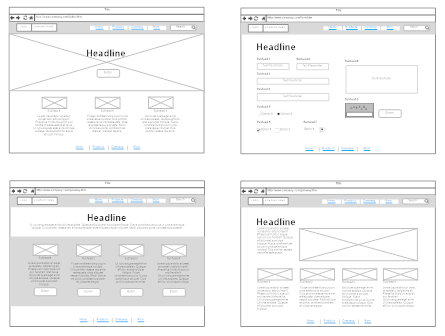
This then provides the foundation for the wireframe, which is a set of images in which you show the elements you want on each page and how they relate to each other.

Despite the technical name, a wireframe is just a rough sketch of what you want your website to look like and where you want the elements to be.

Beautiful Website Design Can Boost Your Arctic Tourism Company
Source: SmartDraw

A good wireframe will include the location of each image, header, content paragraph, buttons, or form field on each page.

There are great tools available such as MockFlow which will help you create your own!

Write the Content

Having created the wireframe and left spaces for paragraphs, it is now time to write the content that goes into those boxes!

We recommend three best practices for content writing, which will allow you to produce attention-grabbing and engaging content.

1. Keywords

The design of your website is important, but it’s wasted effort if no one sees it.

The best way to be seen is to rank at the top of people’s search results on Google.

Here at Beacon we’re experts on SEO optimization and help all our clients to rank on Google through the use of keywords.

Keywords tell google what each page of your website is about so they can show it to searchers. Importantly, keywords should not just be in your text but also in your headers.

2. Headers

Speaking of headers, you should put a lot of care into creating these as well.

Many people just skim over the text of a website and read the headers, looking for what they’re interested in.

That’s why it’s important to create catchy headers that communicate what the various sections of your website are about.

By putting keywords in them, you also help Google know what your page is about.

3. Quality content

Both users and Google appreciate good quality content.

People will continue reading and pay attention to what you’re saying (and selling!) when your content is well written, and this helps to rank on Google as they drop pages with a high bounce rate, i.e. people who click on your website and quickly leave again.

You don’t need to be a perfect writer, you just need to write from your own unique perspective, providing value to the user that they can’t get elsewhere.

It’s effective to address the reader in the second person, as “you”. It’s also useful to put yourself in the user’s shoes so you can write in a way that makes it clear why your product is so good for them.

The best sell is to make it clear how your products add value to someone’s life.

At the end of each web page, you should include a call-to-action. This is a request for the user to take action on what they have just read, such as: “Call (123) 456-7890 now for a free inquiry!”.

Develop your arctic tourism website

The site map, wireframe, and content are all going to come together in the final web design.

The first step in developing your website is deciding which software to use to build it.

At Beacon, we use WordPress for all of our arctic tourism clients.

This has many tiers of package to choose from, so you can purchase a cheap package to begin with, and add functionality if necessary.

You should choose a package that best fits your needs, taking into consideration your site map, wireframe, content, and list of concrete features and specifications that you came up with in your initial meeting.

After you have chosen your package and created an account with WordPress, the intuitive software will help you build your site.

When building your website, be sure to stick to your brand guidelines! A well managed, and cohesive brand is vital for a good-looking website. Learn more about branding for arctic tourism businesses, here!

Go live!

Once your website is ready to go, its time to publish and set it live!

Prior to this, you should make sure you’re ready. We have a checklist we go through with all our arctic tourism clients, here some examples from that list:

  • Go page-by-page throughout the website and click on all the links to make sure they will send users where they are supposed to.
  • Try out your contact form if you have one, submitting a “test” entry to make sure it delivers to the appropriate email address.
  • Enter the URL for your website in all the popular browsers including Chrome, Firefox, and Safari to make sure it looks good.
  • Visit your website on mobile as well to make sure it is properly mobile optimized.

With WordPress, you can point the domain name from your old website to your brand new one.

At that point, your new website is fully functioning and ready for visitors!

Is your arctic tourism business ready for a new website?

We hope that you’ve found this glimpse into our work helpful, but if you feel like you want to hire us to take care of the whole process for you, you can book a free consultation, here!

Perhaps you’ve heard that tourism is one of the few growing industries in Alaska. This is partly the result of a lessening of the severity of the climate (the Arctic is warming twice as fast as the rest of the world) and so-called “last chance tourism.” If you want to take advantage of this you’ll want to beat out the competition with a strong, consistent brand. At Beacon Media and Marketing have a lot of experience guiding our clients to build a strong brand that represents them.

Step 1. Understanding what branding is

It is important to understand what a brand is and what it is supposed to do.

Your brand is your visual identity–it is what people think of when they think of your arctic tourism business. Therefore, it needs to reflect your reputation and what people think of you.

There are three main things that you should aim to do with your brand:

  • Capture: if you already have a good reputation it is important to capture that and build upon it
  • Discover: if you aren’t sure how people perceive you, you should aim to find out and build on that
  • Pivot: If you currently have a bad reputation, then it may be possible to use a rebrand as an opportunity to present yourself in a new light

Read on to find out how you can make use of branding to influence how potential customers perceive your arctic tourism business.

Step 2. Brand discovery

The brand discovery meeting is a fundamental basis on which the process depends. This is an opportunity to involve your whole team and get creative working out what your brand means within the arctic tourism industry.

When doing this with our clients we like to guide them with a series of questions:

  • Describe your business in two sentences or less. What is your “elevator pitch?”
  • A brand is a promise. What is the promise of your brand?
  • What is the current perception of your arctic tourism business? What is the desired perception?
  • How do you want to position yourself in the marketplace? Are you the “value” company? The expensive boutique? The innovator? The “tried and true?” The academics? The quick-fix? The thought leaders?
  • What is your big-picture mission?

Your primary focus in this part of the process should be focused on identifying your competition and how you can differentiate yourself from them. You also want to identify your target customers and work out how you can appeal to them.

Step 3. Naming

Once you have an idea of what your brand is, you want to work on a name! In this section, we’ll give some advice on how to come up with a name, and then we’ll move on to some tips for writing a catchy tagline.

Sometimes naming can come naturally, but other times it can be the hardest part of the process, so we offer some advice:

  • Take a look at what your competitors and arctic tourism companies out-of-state are naming themselves. Consider taking inspiration from Icelandic companies – Iceland has really captured the arctic tourism industry. Don’t copy but use these names as a starting place for your own, unique thoughts.
  • Consider using the name(s) of your owner(s) or founders.
  • Decide if you want to use your location (city, region, state) in your name.
  • Think about any nouns or adjectives that struck a chord with who you are when you had your discovery meeting.

Also, try using a thesaurus! Search some of the top words from your discovery meeting, and see where that takes you.

Tagline

A tagline is an opportunity to communicate more about the business than comes across in the name.

Often the name is the result of narrowing down a longer concept. This concept can form the basis for creating a catchy tagline. Alternatively, work up from your name and expand into a message that fits within arctic tourism!

The tagline is important as it is going to pull together all the messaging of your brand. Everything else you write should tie back into this.

Step 4. Choosing Iconography, Color, and Font

For those not trained in art or design, it can be difficult to communicate concepts visually. Here we’ll give a few hints to help you start thinking in the right way.

A lot of what works here is due to human psychology and how we perceive objects, both emotionally and mentally.

Iconography

The icon is the part of your brand that most people think of when they talk about the “brand” or the “logo”. It is the part of your brand where you can use form, rather than text to communicate your brand.

It can be used to represent name, location, and mission in a quick and easily accessible manner.

A strong example of this is the icon we designed for Juneau Youth Services.

This is a company that aims to inspire hope and freedom in young people, for the present and the future.

5 Steps to Build a Strong Brand for Your Arctic Tourism Business

In order to communicate both their location and their message of freedom, we used the mountains and a bald eagle as their icon.

Icons are more versatile than the full logo and are able to be used on promotions, watermarks, and more.

When creating an icon it can be useful to look at those used by other arctic tourism businesses for reference and ideas.

Creating emotions with colors

Color is a vital aspect of branding, which we have covered in more detail here.

When looking into what colors to use it will become clear that some are good for associating with arctic tourism, while others aren’t appropriate at all.

  • Red – Red comes in a variety of shades, each with their own distinct meaning! Red could say “temptation,” “stop and pay attention,” “warning” or “danger,” “celebration,” “love,” or “femininity.”
  • Orange – Mmm, orange. We often associate this color with tasty food! A gentler version of red, orange can also communicate qualities like “light” and “life.”
  • Yellow – Just like orange, red can mean light and warmth. Like red, it can catch attention too. Yellow in its gold form represents wealth, luxury, and rank. In other shades, yellow can mean joy, optimism, or comfort.
  • Brown – If you take a natural approach to beauty at your arctic tourism business, you may want to use brown! Brown portrays earth, wholesomeness, the outdoors, organic products, and all-natural ingredients.
  • Blue – No, blue does not just mean “sad.” Blue tells our emotional minds to be at peace, reminding us of tranquility, mystery, depth, and strength. It is also used in the health and wellness industry.
  • Green – Green can be a hard color to get right. It comes in the most shades of any color in the world and it has a wide range of emotional associations! Green can mean anything from new beginnings to relaxation depending on which green you choose.
  • Purple – A mix of red and blue, purple can take on the attributes of both! If it leans in the direction of red, purple communicates energy and intensity. If it leans blue, purple takes on a calmer and loftier feel.

Adobe has a great tool for identifying complementary colors, which you can use to ensure a consistent look across your branding.

Typography

The typeface is an important component of a brand which slips under most people’s radar until you have to make decisions about it!

However, it is important to make a choice that conveys the feeling you want to inspire in people who see your brand.

Contrast the font used to advertise a horror movie with one used in an online publication.

The first is probably scratchy, broken, and sharp-looking. The second is probably clean, neat, and professional-looking.

The font should also be matched to the other elements of your logo and tie in with the overall theme of arctic tourism.

Google has a useful font tool, which you can find, here.

Step 5. Manage your brand

Once you’ve determined your arctic tourism brand, that isn’t the end of the process, it is vital to maintain and protect it!

A mismanaged brand can become messy and inconsistent, which dilutes the effectiveness of your brand.

At Beacon, we provide clients with a style guide that informs staff of what logo, colors, and fonts to use and how to use them.

Are you ready to give it a go? We hope this article will serve as a handy reference while you’re getting started!

On the other hand, we appreciate that brand creation can seem like a daunting challenge. If you are interested in hiring Beacon to take care of brand creation for you, you can schedule a free consultation, here!

Originally published on November 27, 2015. Updated on February 6, 2020.

We wish we had a dollar for every time a client told us: “I don’t shop in the ad section when I shop on-line”, or “I just scroll right past the ads”. Seriously.

Google.com is the most popular website in the world. It’s been estimated that it handles as many as 7 billion searches a day, while a survey conducted in 2019 revealed that as many as 63% of internet users would click on Google ads. It’s no surprise, then that Google Ads (formerly known as Google Adwords) brings in as much as $100 million a day in revenue.

Let’s put it another way: Google reports that advertisers make $8 for every $1 they spend. Trust us when we say it can be a very powerful lead-generation tool for your business.

What Do Google Ads Look Like?

Before we go any further, it’s important that you understand what Google Ads look like and where they appear. Here’s a visual that shows you were the advertising places normally sit:

sem

The highlighted area is the paid ads on Google. Yes, other search engines offer advertising (including Bing and Yahoo), but since more than 90% of global internet searches are conducted through Google, we recommend focusing your efforts here.

It’s based on a bidding system, which basically means you can select the maximum amount you’re willing to pay for someone to click, see or engage with your advertisement. This means you can design a strategy according to your budget – but remember, the more you bid, the better your placement.

The good news is that you can dial it to specifically target your ideal customers – for example, people in your local area, people in a particular income bracket, and people with specific search interests.

This means it’s much more focused than traditional advertising methods, because you’re only talking to people who are likely to be interested in the products or services your business has to offer.

It’s also much easier to track their success, so you know whether they’re working or not. The best way to do that is by signing up for Google Analytics (you can learn more about that here), because this will show you who is clicking on your ads so you can refine them until you’re hitting the right target.

Designing A Google Ads Campaign

Balancing Organic Search and Paid Search

There are two ways Google can help generate leads for your business: organic search and paid search. Organic search is implemented through a process called Search Engine Optimization (commonly referred to as SEO). This post is going to focus on paid search, but if you’re interested in learning more about how you can use SEO to optimize your website, check out these blog posts:

It’s important to strike a balance between the two. Studies show when you place high organically as well as have effective ads you actually increase your click rate to your ads by 40-65%. In today’s world, that means they work hand-in-hand to help grow your business.

Google Ads Fundamentals

Here are seven essential tips to remember when setting up a Google Ads campaign:

1. Define clear goals.

The point of almost every campaign is to generate leads and grow sales, not to promote brand awareness. That means you need to be really specific in defining your desired outcome. For example, is your goal to have people fill out an online form? Call you? Make an appointment? Purchase one of your products? This will help you set up your ads so that they work as effectively as possible to achieve this outcome.

2. Keep your target audience in mind.

One simple way to do this is to use the marketing principle of AIDAS:  Attract, Interest, Desire, Action, Satisfaction. Basically, what this means is that you need to “attract” the searcher based on the search terms, raise their “interest” by offering a special, you need to convince them they “desire” your product, include a call to “action”, and then make sure to provide “satisfaction” when they choose your website. This is a really helpful framework when it comes to choosing the exact wording you’ll use.

3. Use specific keywords.

Keywords are the search terms people will use when they’re looking for a particular product or service. It’s important to be specific, because anything too broad will drown amongst all of the other suppliers – for example, if you’re looking to boost the duct-cleaning arm of your HVAC business, “Duct cleaning services” will be more effective than “HVAC services”. The other important keyword is to include your location, because this will generate quality leads. For example, “Lake Tahoe tandem bike rental” will do better than “tandem bike rental”. Using the right keywords will get the most from your investment.

4. Have a great landing page.

Website design has never been more important. Think of it as your best salesperson – in order to convert a successful sale, you need to make the right impression from the start. A “landing page” simply means the page your potential customers will see when they click through the ad, which serves two purposes: to give them the information they’re looking for and to help you track the success of your campaign. It needs to deliver on customers’ expectation – for example, if your advertisement featured emergency dental services or custom-build machinery, you need to provide that information upfront. If your website has brought in a new customer, they don’t owe you anything. They’re not going to put in any effort to find the right page. You need to make it easy for them.

5. Think about mobile audiences.

Google has reported that over 50% of the world’s searches will be done from some sort of mobile device, so make sure you factor this in when you’re designing your ad. Use a strong call to action in your ads like “Click to call today for 10% off”, make sure your contact details are easy to find, and ensure your landing page is optimized for mobile to give them a great user experience and increase your conversion rate.

6. Always do A/B testing.

When setting up your goal for your Google Ads campaign, make sure that you create multiple variations for your ads and then monitor their results, revise them, and then test them again! One word or tag line can make a huge difference in your ads. Running a few experiments early will help you get the hang of them and find out what works best for your intended audience. By doing the testing you will find which ones provide the best click rate, lowest cost per click, and also the highest conversion rate, which will make a big difference over time.

7. Monitor and tweak them as you go. Don’t forget about your ads! Checking in regularly will make sure your message is always optimized with the best keywords, because you’ll be able to tell who is clicking, from where, and what else they’re viewing on your website to identify future advertising opportunities. (If you’re not sure what metrics you should be tracking, you can check out this blog post we prepared earlier.) By knowing what works and doesn’t work, you will be able to run a successful Google Ads campaign, increase the number of leads you generate, and ultimately convert sales.

Still have questions? We’d love to talk to you about how Google Ads can help your business. Feel free to call us on 907-563-6008 or send us an email.

Originally published on November 24, 2015. Updated on January 30, 2020.

Welcome to the dark side. We have cookies.

Back when Facebook Ads were first invented, they used to be called “dark posts.” They were designed so they wouldn’t show up on your business page’s normal Facebook news feed, but in the news feeds of the people who you chose to target. They were launched in 2007 and they were revolutionary.

As you can imagine, they’ve come a looooong way since then. Today, Facebook Ads are some of the most sophisticated digital marketing tools businesses can use, because they allow you to maximize your budget by specifically targeting the people most likely to go on and become leads.

In other words, you shouldn’t be afraid to embrace the dark side.

Why use Facebook Ads?

The biggest advantage to using Facebook Ads is the fact that you can be very specific about your target audience and you can deliver your key messages directly into their hands (or pocket, as the case may be).

For example, if you run an HVAC business, you want to target homeowners in your local area who have the means necessary to pay for boiler and furnace replacement and repair. You wouldn’t want to waste your budget pursuing improbable leads like people who are renting or still in age brackets that are likely to live at home.

The Facebook Ads Manager allows you to drill down and be very specific. Facebook collects an enormous amount of data about its users, which means you can optimize your ads to appeal to people in a certain location, in a certain age bracket, or with certain interests. In that sense, it’s much more effective than traditional advertising methods that cast a wide net in the hope or capturing the interest of a few potential leads.

To continue with the HVAC example, you could optimize your ad to specifically appear in the news feeds of people living in Anchorage, aged 30-60, with an interest in renovation. It’s really quite amazing.

Facebook Ads

Facebook Ads are based on a bidding system. Each time you set up an ad, you can set a campaign budget and then set the maximum amount you’re willing to pay for your campaign goal, and Facebook will give you an estimate of what your daily leads will look like. It’s essentially a cost-per-click model, which means you have a lot of control over the amount of money you are spending and the way in which you’re spending it.

You can also tweak advertisements to achieve specific campaign goals. Perhaps you want to raise awareness, in which case you may simply want to make impressions. Perhaps you want to build your community, in which case you may want to target engagements. Or perhaps the thing that’s of highest value is direct clicks through to your website. These are all options you can tailor according to your campaign objectives.

Trust us when we say it’s a powerful tool that should be included in every digital marketing strategy.

Convinced? Great. Call us today to set up a free consultation.

Optimizing Facebook Ads

Another great thing about Facebook Ads is that they’re agile. You don’t have to “set and forget” them as you would with traditional advertising methods, spending huge amounts of money on TV commercials, radio spots or full-page newspaper advertisements. You can jump back into the back end at any time and tweak your advertisement to optimize its effectiveness.

It’s important to remember that your audience has to come first. You might have a bunch of great ideas to raise awareness and generate leads, but if you start spamming your target audience, you may put them off and potentially lose them. At best, they can scroll straight past your ads. At worst, they can unlike your page or even select the option to start hiding your ads.

With great power comes great responsibility, so use it wisely.

(OK, we have to admit we’re actually quite enjoying the superhero puns.)

Facebook Ads

When you’re first starting out, you may find it helpful to try A/B testing. This is essentially when you try different variations of headlines, images, text and calls to action to see what’s going to work best.  Running two advertisements concurrently also allows you to target different audience sectors, which will help you find the “sweet spot” in the market that you can target in future campaigns.

It’s amazing how much the semantics of different combinations of words can impact the way your brand is perceived, and it may take a few tries to identify the perfect combination. A/B testing helps cut out a lot of the guesswork, because Facebook Ads Manager provides very clear reports both during and after each campaign that let you know exactly where you stand.

Not sure where to start? We offer social media marketing packages that will help you launch your campaign on the right foot. Set up your free consultation to learn more.

Understanding Facebook reports

Facebook really pushed advertising into the 21st century by taking the guesswork out of advertising. It’s no longer a matter of just placing a commercial in traditional media and waiting by the phone to see if it worked or not.

The Facebook Ads Manager homepage has a clear breakdown of results for each advertisement, looking at key metrics like results, reach, impressions, cost per result and amount spent. It makes it easy to see what’s working and what’s not so you can update your strategy and optimize your results.

(If you haven’t already guessed, managing a Facebook Ads campaign is a pretty hands-on process!)

Facebook 3

As you can see, it’s very clear and easy to understand.

This sample shows results for the “ad set”, but you can also click the different tabs to get an overview of how the campaign is performing as a whole and how each ad is performing individually.

If you’re a new company looking to advertise for the first time, or you’re new to the world of digital marketing, this is a great way to make sure you’re getting the maximum amount of bang for your buck.

Make sure you stay on brand

With all types of marketing, it’s important to keep messaging “on brand.” This means maintaining a consistent tone and style so your customers can feel like they are getting to know you. This is essential to building trust.

The other thing to remember is that social media is ultimately a fun and playful platform. It’s something people typically turn to in their spare time, not as part of their workday, so the information you provide needs to be valuable and entertaining. You’re targeting people, after all, not robots – don’t be afraid to inject some personality.

Hopefully this post answered most of your questions about Facebook Ads.

To quickly summarize the key points:

  • Facebook Ads are an incredibly powerful marketing tool.
  • Run A/B tests to see which combination of words and images is most effective.
  • Pay attention to your results and tweak things as you go.
  • Make your ads helpful and personable.
  • Remember the dark side is always much more fun.

Still have questions? Our friendly neighborhood social media experts would be happy to help you develop a strategy to grow your business through Facebook Ads. Schedule a free consultation.

We may not be able to take you skiing, camping or hiking, but we can help you grow your outdoor clothing and equipment shop so you can help others get out there! Read on to find out how Google ads put you right in front of your customers.

Google ads put your business at the top of the search results page, on the most used search engine in the world. Google accounts for 77% of search engine users and the first five results receive 67.6% of clicks, according to Forbes.

This means that if you want your business to be seen you need to be at the top of Google, otherwise it’s like you’re not on the internet at all. Here we’ll explain what Google ads are, and how they can help you get your business right in front of customers. We’ll also tell you what you need to know to get started yourself!

Since the outdoor equipment industry has been identified as an emerging sector for Alaska, now is the perfect time to grow your business. The sector is growing significantly due to a lessening in the severity of the climate. The Arctic is warming twice as fast as the rest of the world, and this has the result of reducing the length of the snow season in Alaska. As most visitors to the state come in the summer months, and many take advantage of the great Alaskan outdoors, you can expect to see an increase in visitor participation in outdoor activities.

What are Google ads?

That’s enough data for now! Let’s move on to what Google ads are, then we’ll look at how they can be useful for the outdoor equipment industry specifically.

Most people are familiar with the spooky feeling of seeing an ad about something you were only just thinking about. This happens because you’ve been targeted by something called “remarketing”.

Remarketing is the practice of having advertisements for websites or products follow you around the internet.

These ads can be generated because you visited a website, or because Google has determined your interests from tracking your online activity. As a business owner using Google ads, you can make use of this kind of advertising power.

There are two types of google ads:

  • Display ads: these pop up on websites, they are usually a graphic or image and can be identified by grey “advertisement” text above them.
  • Search ads: these appear at the top of your search results page and can be identified by a small green box with “ad” to the left of the URL.

Clicking on these ads charges the business who runs them, hence the name “pay per click” or “PPC”, which we’ll get into in more detail in the next section.

Paid ads are generally at the very top of the search results page, below them are the “organic” results. Here at Beacon, we recommend strategies for both paid ads and organic ranking for our clients.

Google search ads comprise only three parts: headline, URL, and description. Display ads, on the other hand, can come in up to 16 combinations of logos, graphics, headlines, and descriptions!

How do Google ads work?

When starting to look into Google ads, it is important to understand the algorithm, bidding structure, and cost. This is all managed through GoogleAdwords, which you will want to create an account for, which you can do here.

The Algorithm

You may have heard this magical-sounding term “The Algorithm” which has come to public prominence in recent years, related to platforms like Facebook and Twitter. Here we’ll explain what is meant by the word algorithm in the context of Google ads.

Google uses an algorithm to determine which ads you see when you search. In the fraction of a second after you press search, google takes an inventory of all the ad accounts that contain keywords or phrases used in your search.

Say you search for “outdoor clothing and equipment shop near me”. A business trying to increase their outdoor equipment sales will have ads on google which are included in the inventory search.

But how did they get it included in the inventory?

The business will have bid a monetary amount that they are willing to pay every time someone clicks on their ad. This makes it a sort of auction, and the winner is determined by two factors:

  1. The maximum cost-per-click (CPC) bid you have set
  2. The quality score of your advertisement

The second point here is very important.

Google is a business, they want to make money. The best way for them to do this is to provide quality content so that people come to trust and rely on their service. They have a near-monopoly on search engine use which they built by providing the best content to people.

The quality score is determined by two factors:

  1. Past performance of your ad, ad group, and account in general.
  2. The relevance of your chosen keyword, ad (title, URL, and description), and landing page to the search and to each other.

Let’s just explain the terms “ad group” and “landing page”.

An ad group is the group of keywords that you are trying to rank your ad for. The landing page is the page users “land” on after they click on your ad. The ad you write and the landing page should both use the keyword you are targeting and be focused on the topic you are discussing.

The factors we just discussed culminate in a simple equation that determines your ads final rank on the results page:

CPC Bid x Quality Score = Ad Rank

Google display ads work slightly differently, with bids made on ad groups, rather than keywords. You also have the ability to bid on impressions rather than clicks. Impressions are the number of times your ad was delivered, i.e. how many times it was “seen” by searchers. In this case, we talk about “cost-per-impression” or “CPM”.

How much will Google ads cost my outdoor clothing and equipment shop business?

We’ve mentioned that you will be charged every time someone clicks on one of your outdoor equipment business’s google ads.

The equation to determine the cost per click is:

Next highest ad rank/Quality Score + $0.01 = CPC

This means that the higher your quality score, the lower your costs. Again, this is due to Google’s own self-interest in providing quality to users. It is important to note that the CPC will never go above your maximum bid.

Can Google ads grow my outdoor clothing and equipment shop business?

Ok, we’ve covered the ways google ads works, but can they really grow your business?

The answer is, absolutely!

But it is not guaranteed.

It is important to understand the level of competition in the area you are targeting. Some industries, in certain locations, have more competition than others. For example, the CPC in the legal industry in anchorage, at Beacon HQ has been as high as $50!

Spending this amount per click is unlikely to be worthwhile unless you have very high profit margins, especially as a click is not necessarily a customer.

Keywords for “outdoor equipment” have quite high competition in our area, although the prices are still relatively low. We might instead choose to use “outdoor clothing and equipment shop”, which has low competition while retaining high search volume. Remember, you may find that the situation is different where you are.

A competitive industry shouldn’t discourage you, however!

We at beacon excel at creating quality ads, and that goes a long way to reducing costs and ranking your ads higher than the competition.

So, how do we do it?

  • For every service we want to advertise, we use a budget of at least $300 a month.
  • We always find some way to differentiate the services we are advertising by using more nuanced keywords.
  • Our team makes it a priority to create quality, relevant ads and landing pages.

Are you ready to give it a go? We hope this article will serve as a handy reference while you’re getting started!

On the other hand, our team is Google Partner Certified and we are constantly working to achieve the best results for our clients.

If you are interested in hiring Beacon to tackle advertising for you, you can schedule a free consultation, here!

You may have heard that blogging is important to growing your business, and it is. Here, we are going to cover some of the reasons why it is a useful tool for marketing in the Arctic Tourism sector and give some tips and tricks on how to do it best.

The main thing to remember about blogging is this,

Consistency is key.

Why should I put in the time to blog about arctic tourism?

If you want to see results you’re going to have to commit to regularly providing quality content to people. If you don’t persevere with it, then the work you do put in will be wasted. How will you know if you’ve succeeded? Most people never look beyond the first page of Google with one study finding that only 0.78% of searchers clicked on something on the second page of Google. Clearly then, it is necessary to get on that first page, and ideally at the top of it. But how? In this post, we’re going to cover some of the methods used by our expert marketers to get our clients on the top of the Google search rankings.

Hopefully, we’ve convinced you that getting on the top page of Google is important, but why is it specifically important for arctic tourism? Tourism is one of the few growing industries in Alaska, according to a 2016 report. This is partly the result of a lessening of the severity of the climate (the arctic is warming twice as fast as the rest of the world) and so-called “last chance tourism.” As more people start to look north for their next vacation, it’s time to position your arctic tourism business right in their eye-line, at the top of their search results.

Case Study: The Beacon Blogs

If you’re not yet convinced, let us take some time to show you we know what we’re talking about.

Two years ago we decided we wanted to move into the functional medicine industry, so, we started blogging about it. We wrote blogs about each of our services, heavily targeting the keyword “functional medicine”. Within a few months we had our blog posts ranking at both #1 and #2 on Google for the search “marketing for functional medicine”, and we’re still there. So, how did we do it?

We used a few simple tricks of the trade that you can also use on your own arctic tourism blogs. First, we wrote blogs of the specific length that works best for Search Engine Optimization (SEO), which we’ll discuss in more detail in a bit. Next, we had a focused keyword strategy. This involves writing certain keywords that you want to target in your text and headings. For the functional medicine blogs, these included “functional medicine,” “marketing,” “inbound marketing.” Finally, we ensured our posts were technically well optimized, they work on mobile, are fast-loading, and we’ve set the metadata. Metadata just means the information you provide Google about the contents of your blog so they can determine how relevant it is to searchers.

Although we ranked these two blog posts at the top of Google, that was only part of the goal. The main objective of this was to generate leads. By having these blogs at the top of Google, we generate more leads to our website which converts into more sales. These two blogs now constitute a key part of our sales funnel!

Case Study: The Mandanas Dental Blog

These techniques are not something we just keep for ourselves either! We’ve also used these strategies to help our clients find success. One of our longest-standing clients, Dr. Mandanas decided a few years ago that she wanted to start focusing on integrative dentistry. So we started blogging on the subject. Using the same techniques as for Beacon, we managed to rank Dr. Mandanas on the first page of Google. We were very happy to be able to achieve this for a valued client in a short time-frame.

This approach to blog writing uses the inbound marketing philosophy, which we’ll discuss in the next section.

Proven methods of blog marketing

In this section, we’ll discuss some proven methods for writing successful blogs, including the inbound philosophy, question answering, and the waterfall method. These are all techniques you can use in blogging for your arctic tourism business.

Inbound philosophy

The inbound marketing philosophy is a simple concept. People are online all day, every day–this means that putting quality content in front of them is easier than ever. The core tenet of the inbound philosophy is that if you consistently provide useful content to people, they will remember you and seek you out when they need your services. Imagine your customers are a cat. If you chase the cat it will run away from you, but if you have what the cat wants, it will come to you!

So, how do you go about enticing the cat? Begin by researching what your customers are interested in. There are tools available to help you find out what searches people are making on Google, we use one called Keywordtool.io. Once you’ve identified what people want to know, you can write blogs on it. People typically ask questions on Google, so answering these can be an effective way to provide quality content.

Answering Questions

We’ve established that people use Google to ask questions, so it’s super effective to answer them. If you’re the one people can rely on when they want to know something, they’ll remember you when they want to buy something. Here’s a quick rundown of our process for blog writing:

  • Keyword planning – We use Google’s own keyword planner to identify how many people are searching for certain things.
  • Finding questions – Next, we use Keywordtool.io to identify what questions people are asking about those topics.
  • Writing – The next step is the most obvious, write a blog answering that question!
  • Setting the metadata – We’ve mentioned this before, it’s basically the process of setting the title, description, and keywords in a format that Google can use to populate your result.
  • Schedule – It’s important to be consistent if you want the best results. We recommend to our clients that they blog at least 1-2 times per week, but even with a minimum strategy, you can see results in 6-9 months.

The Waterfall Method

The waterfall method of blogging is a highly successful, and slightly sneaky, trick for getting your posts to rank on Google! Google highly rates backlinks; that is, other credible websites linking to your blog. Links of this king act a bit like a referral, the website is letting Google know your post is reputable by sending people there. But it can be difficult to get links from other websites. So, we do what is called backlinking. This involves using your own website to provide links! A common way of organizing this, which you can use successfully for your arctic tourism business, is called the waterfall method.

Here’s an example of a waterfall we created for our mental health blogs:

As you can see, this looks a bit like a descending waterfall, with multiple layers all linked to one another (and to this blog too!).

Search Engine Optimization for blog marketing

Search Engine Optimization (SEO) can sound intimidating but really it’s a simple concept. SEO refers to the tools used to maximize your chances of getting highly ranked on Google. We make sure to set keywords that we know people are searching for. These are spread throughout the text and headers of the blog, as well as the URL of the page. It also means picking a title that is the perfect length, with certain power words that are shown to gain more clicks.

We hope this blog has given you an insight into how blogging can be a powerful tool for marketing your arctic tourism business. If you feel that you want to make use of our expert marketers for your business, you can schedule a free consultation. If you just want to get some more information, you can get in touch using our contact form. Thanks for reading, we hope to hear from you soon!

Originally published on June 27, 2013. Updated on January 23, 2020.

Believe it or not, Instagram isn’t just for posting pictures of your most recent meal.

Instagram offers a visual way for businesses to create a strong brand, promote their products and include their business in social media conversations. About 25 million businesses actively use it as part of their digital marketing strategies.

The old saying, “a picture tells a thousand words” is true.

Pictures offer a dynamic way to engage viewers, not just for major brands, but for every type of business down to mom-and-pop stores. They evoke an emotional response; the more interesting and creative your pictures are, the larger an audience you will draw in.

Want to skip ahead and get expert help? Schedule a free consultation.

Instagram for business 2020 updates

Instagram frequently updates it software and strategies. In December 2019, it rolled out a fresh batch of features to make it easier for businesses to connect with and grow their audiences.

Growth insights

This helpful statistics tool is a great way to get a snapshot of which posts and stories are generating the most followers. This is incredibly valuable because it opens the doors to the types of conversations that get people excited about what you do… and ultimately generate new leads.

This tool can give you an aggregated view into follower changes by day or by week, which lets you know what’s working and what’s not at a glance so you can refine your strategy. This is key to maximizing effectiveness and making sure you work smarter, not harder.

Instagram for Business

Stories about you

Instagram features is an incredibly cool feature that rolled out in August 2016, which allows you to have conversations with your audience and show them what you’re up to in real time. This feature lets you know as soon as someone mentions your account in one of their stories.

It has a similar effect to publishing testimonials on your company website, in that it shows real people endorsing and connecting with your business in real time, which builds trust and confidence in your brand, because you can re-share their stories on your own story. Very cool.

Age gating

The key to digital marketing is honing in on your specific target audience, which means it’s really important to make sure your messaging is reaching people in the right age bracket.

If you are promoting a craft brewing company, for example, you need to make sure you’re appealing to people aged 21+. It’s the same if you’re promoting an educational product, because you’ll want to make sure your efforts go towards targeting parents and not students.

The age gating tool allows you to control who can see your Instagram profile by setting up a minimum age limit for your account. It’s really simple and will maximize the effectiveness of each post.

Flexible profile displays

Previous versions of Instagram have had a one-size-fits-all approach when it comes to profiles. The new version is much more customizable, allowing you to share the profile information that works best for your business.

If you operate an online store, for example, a street address is essentially a waste of space; however, if you operate a local dental clinic, it’s very valuable. All you have to do to access this update is go to your profile page, click “Edit Profile” and update your details.

Secondary inboxes

Once your Instagram account grows to a point where your audience starts interacting with you frequently, you’ll find that you start getting a lot of direct messages. It can be hard to keep on top of them all, but this feature allows you to organize your inbox with primary and general tabs. You can move messages between the two with a simple swipe, which will make it much easier to stay on top of your messages – and most importantly, follow up on every single new lead that hits your inbox.

Not quite sure what this all means for your business? Reach out to us with your questions.

How to use Instagram for business

If you are new to Instagram, a good place to start is to upload pictures that show your product in a unique and fun way. If you’re a clothing company, post pictures of people wearing your gear in cool locations. If you’re a brewing company, show people enjoying your beverages in a variety of situations. If you’re a service-based company, keep people updated with your latest projects to show off the versatility of your business. If you’re a manufacturer, show your products in action.

Polish is nice, but it’s not essential. You don’t have to be the brightest, shiniest, wittiest content creator. All you have to do is tell a story about your brand and highlight the things that make you unique. Behind-the-scenes photos can also be a powerful way to engage viewers – the audience feels as though they are getting a special look at something they will not normally see.

https://www.instagram.com/p/B-iBjZvHCQg/?utm_source=ig_web_copy_link

Define your target audience

Different types of content appeal to different types of people. This is why it’s really important to define your target audience right from the start, because it will help you develop a consistent strategy specifically designed to appeal to their tastes and solve their problems.

That’s what you’re here to do, after all: solve problems.

The best way to do this is to determine who already buys from you and who is already following you on social media. That way, you can find out exactly what type of people are interested in your business and figure out who is most likely to buy your products or enlist your services in future.

You should also do some thorough competitor research. Look up similar local businesses operating in your area and follow their pages. You’ll be able to get a good overview of their strategies by looking at the types of content they post and the types of engagement they get from their followers.

This will point you in the right direction so you can develop a winning strategy of your own.

Use hashtags strategically

The use of hashtags also offers a way to take your business into everyday conversation.

For example, if someone was looking for a car they could search for key words such as #wheels #auto #car. If you are using these hashtags with your photos, the user conducting the search will see them.

Using your own creative hashtag can often catch on and be used by other viewers, creating more traffic to your Instagram photos, which leads to more awareness of your business, more traffic to your website, and potentially more leads and sales.

https://www.instagram.com/p/B3NxoEmHtEi/?utm_source=ig_web_copy_link

Create interactive content

Don’t be afraid to have a little bit of fun with you Instagram account and your followers. Be as interactive as you like and include them in the story you’re creating with your account.

You might find that competitions are a great way to build an audience and engage followers, so you can offer a prize or a benefit for uploading a picture featuring your product in use.

You can also ask them questions and ask them to vote on things such as new product designs, special offers and even things like events, because it will help boost your engagement.

Make sure you also interact with the content your prospective customers are creating – follow them back, like their content and leave thoughtful comments on their posts. Remember that social media is always about the people behind the posts. It’s not just about the number of likes or comments, it’s about creating real human connections with other people in your community.

#goodluck

We can help! Our social media experts would love to help you develop a killer new Instagram strategy for your business. Schedule a free consultation.